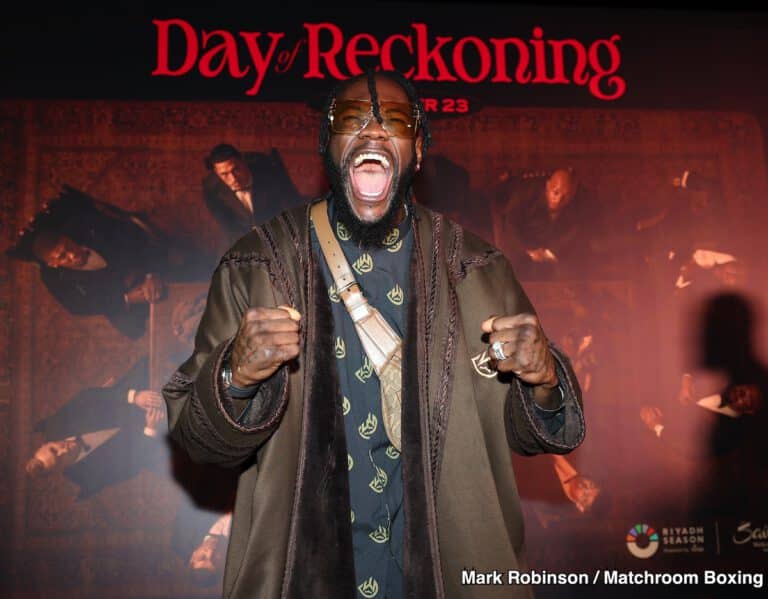
Mauricio Sulaiman approved Oleksandr Usyk’s request for a voluntary defense, and the WBC has cleared a path that allows Deontay Wilder to qualify despite a loss to Joseph Parker less than two years ago. The sanctioning body currently ranks Wilder at number 13 and has described the scenario as legitimate.
“Absolutely, we are hoping to see him back in the ring,” Mauricio Sulaiman told Sky Sports. “He requested a voluntary defence from the WBC, which was granted, and we’re waiting for the details of his upcoming fight.”
The language was familiar. A request was made. A request was made and approved, with further information expected at a later stage. For now, the route exists because the WBC decided it should.
The WBC’s ranking rationale
Sulaiman expanded on the decision by pointing to Wilder’s past status.
“Deontay Wilder was champion for five years of the WBC. He is a tremendous force. He has great punching power. He is ranked by the WBC, so absolutely he is eligible and welcome to fight Usyk in a voluntary title defence.”
The justification rests almost entirely on Wilder’s former reign, which ended in 2020 when he lost the belt to Tyson Fury. Nearly six years have passed since Wilder was viewed as a leading heavyweight. His activity since then has been limited, and his recent results have not matched the standing implied by a top-15 ranking.
Critics argue that this is how the WBC has long operated. Mandatory positions are created, exceptions are granted, and flexibility appears when recognizable names bring higher sanctioning fees. At 40 years old, with losses to Fury twice and Parker once, Wilder sits above several heavyweights who have done more in the recent cycle.
From the WBC’s perspective, the process is procedural. Wilder is ranked. The request was voluntary. The approval followed.
Usyk’s explanation
Usyk explained his thinking during an interview with Ready to Fight.
“First of all, it’s the USA. I want to box in America,” Oleksandr Usyk said. “Secondly, Wilder has been at the top for the last 10 years. This is about sporting interest.”
Usyk has not fought in the United States since 2019, during the closing stages of his cruiserweight run. His heavyweight title fights have taken place in London and Saudi Arabia. A return to American soil with multiple belts brings added visibility, regardless of opponent.
Usyk also framed the matchup in legacy terms.
“In the big three, there were Joshua, Fury, and Wilder. I beat Joshua twice, I beat Fury twice, and one unbeaten one remains. Wilder.”
That framing leans on name recognition rather than current form. Wilder remains one of the most recognizable heavyweights of the past decade, even as his recent performances have raised questions about where he now fits competitively.
The WBC’s approval reflects that balance. Usyk secures a high-profile U.S. return. Wilder receives another major opportunity late in his career. The sanctioning body keeps familiar heavyweight names active in the title picture and collects its fees. Whether the competitive case fully supports the ranking decision is likely to remain a point of debate.